Last month, the 两会 (liǎnghuì) drew to a close in Beijing. More commonly known as the ‘Two Sessions’, these are the annual meetings of China’s top legislative and political advisory bodies. I would not be surprised if you had not heard about the sessions before, as these are for the most part held behind closed doors and are usually not too exciting. Yet this has changed over the past few years. While the sessions are still far from transparent, the topics being covered and the decisions involved are increasingly relevant. Not just for the Chinese themselves, but also for the rest of the world.
So what exactly are the Two Sessions? Both are plenary meetings held annually in the capital where the national government’s policies are reviewed and ratified. The first session is a gathering of the National People’s Congress (NPC), the country’s highest legislative body. With almost 3,000 delegates, it is the largest parliament in the world. Actually, describing it as a parliament is tricky. The NPC delegates are only indirectly elected through a multi-layered electoral system, where delegates are elected by provincial assemblies, who in turn are elected by lower level (city) assemblies, and so forth. In this sense, you could view the NPC as a proper parliament because the delegates were elected ‒ albeit indirectly ‒ by the people.
Bringing indirectly-elected delegates together once a year to merely rubber stamp the national government’s policies does not equate to serving the will of the Chinese people, as the Communist Party of China likes to claim.
However, in my view the NPC does not actually qualify as a ‘parliament’, at least not according to its common (Western) definition. Delegates rarely vote against government policies and do not engage in any serious opposition. On last year’s Work Report ⎻ the extensive review of the country’s economic performance and future outlook, presented by premier Li Keqiang ⎻ three delegates voted against it (and another three abstained). Now, according to the governent, this is of course presented as a huge vote of confidence in its economic policy: the people completely support us, just look at the overwhelming support from the NPC! To someone who has lived ⎻ save for the two years that I have spent in China so far ⎻ in a Western democracy, this argument is far from convincing. Bringing indirectly-elected delegates together once a year to merely rubber stamp the national government’s policies does not equate to serving the will of the Chinese people, as the Communist Party of China (CPC) likes to claim.
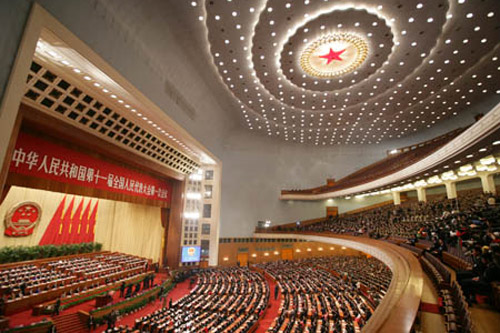
One might object that much of the debate, and perhaps even opposition, takes place prior to the actual voting. The annual NPC session would just be the official moment when legislative decisions are ratified. The fierce debates as seen in the United Kingdom’s House of Commons or the lively opposition taking place in many other Western parliaments is not how ‘democracy with Chinese characteristics’ works. Instead, legislative proposals are drafted and discussed at lower levels of government until agreement is reached. The proposed policies then only have to be finalised and ratified during the annual session of the NPC. In many Asian countries, decisions are often presented without much, if any, criticism or opposition. This is because these decisions were preceded by a long process of internal debate, far removed from any spectators. Against this background, the NPC session is a typical expression of Asia’s political decision-making process.
Even if you would assume the possibility of reaching full agreement by the NPC delegates, the influence of the NPC Standing Committee is practically dominant.
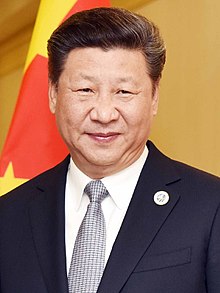
Nevertheless, given the complexity and impact of China’s national politics and the immense size of the NPC, it is very unlikely that any dissent could be completely stamped out. Last year, the NPC voted on amending the constitution to remove the term limit for China’s president Xi Jinping (two terms of five years each), effectively granting Mr. Xi the opportunity to become president for life. Only two (!) delegates voted against this hugely important decision. Claiming that, after careful deliberation, close to all 3,000 delegates approved of this decision is hard to believe.
Furthermore, the NPC has a Standing Committee that has the constitutional authority to modify legislation. The Standing Committee consists of around 150 members and they meet continuously in between the sessions. Even if you would assume the possibility of reaching full agreement by the NPC delegates, the influence of the NPC Standing Committee is practically dominant. In effect, legislative power is exercised by only around five percent of the NPC. You can call the NPC whatever you like, but it surely is not a well-functioning, balanced parliament. I am no die-hard democrat myself, and having no parliament at all does not necessarily has to be a problem. What is problematic, however, is the fact that the CPC often acts as if China has a real parliament. I would much rather prefer an authoritarian regime that is very clear about who is in charge, than one that pretends to serve the will of the people by inviting a ton of delegates to the capital every year that wield no significant legislative power.
The second session, held by the Chinese People’s Political Consultative Conference (CPPCC), is advisory in nature and therefore much less presumptuous. It is made up of members from different political parties ‒ yes, other political parties than the CPC do exist, but they are mostly allied to the CPC ‒ and influential individuals outside of politics (to the extent that is possible in China). The CPPCC’s purpose is to merely advise the national government’s legislative and judicial organs.
The NPC, no matter how much it is celebrated by the CPC, can hardly be called a parliament. So what? For most Westerners, this conclusion is not very surprising. From the Chinese perspective, however, it is worrying because people mistakenly believe their voice is heard in Beijing through the NPC. Instead of pretending to have any meaningful democratic checks in place, the CPC should at least be honest about its authoritarian rule.

 China Hand
2 thoughts on “Two Sessions”