

Article 293 of the Criminal Law of the People’s Republic of China reads as follows:
Whoever commits any of the following acts of creating disturbances, thus disrupting public order, shall be sentenced to fixed-term imprisonment of not more than five years, criminal detention or public surveillance:
- beating another person at will and to a flagrant extent;
- chasing, intercepting or hurling insults to another person to a flagrant extent;
- forcibly taking or demanding, willfully damaging, destroying or occupying public or private money or property to a serious extent; or
- creating disturbances in a public place, thus causing serious disorder in such place.
The final act listed in the Article above is often summarized as “picking quarrels and provoking trouble” (寻衅滋事 – xúnxìn zīshì). This ill-defined crime is frequently used to arrest and detain human and civil rights activists, political dissidents, writers and journalists. Clouded in vagueness and secrecy, one can only guess at the scope of this criminal law and its enforcement. The cases that do reach the international media are just the tip of the iceberg.
When I first heard about this phrase many years ago I could not resist an internal laugh, amused by the obvious unclarity and arbitrary nature of the terms included. Was this catch-all phrase really part of Chinese law? How would you ever convincingly prove someone’s wrongdoing? Surely it had to be a matter of poor translation. However, reading about several related cases online shortly after, the confusion and slight amusement quickly made way for outrage, even fear. This was, and very much still is, the Chinese government’s preferred method of silencing anyone whom it deems politically dangerous. With such a loosely constructed and widely interpreted law, anyone can end up in its net.
Pushed through under the cloak of national security − who can be against that? − and the long delayed implementation of Article 23 of the Hong Kong Basic Law, the region’s mini-constitution, the NSL will finally give the central government the instrument to rein in one of its most restive territories.
Fast-forwarding to 2020, the Communist Party of China (CPC) seems more determined than ever to expand its arsenal of dubious laws with the introduction of the National Security Law (NSL) in Hong Kong. Much has been written about this new law but we actually know very little about it. The legislation is currently being drafted in Beijing without any proper consultation, and is shrouded in mist so typical of the central government’s policy-making process. Pushed through under the cloak of national security − who can be against that? − and the long delayed implementation of Article 23 of the Hong Kong Basic Law, the region’s mini-constitution, the NSL will finally give the central government the instrument to rein in one of its most restive territories. An instrument projected as a benevolent act towards the people of Hong Kong, who supposedly long for stability after more than a year of unrest and alleged foreign interference, but which I fear will amount to opening Pandora’s box.
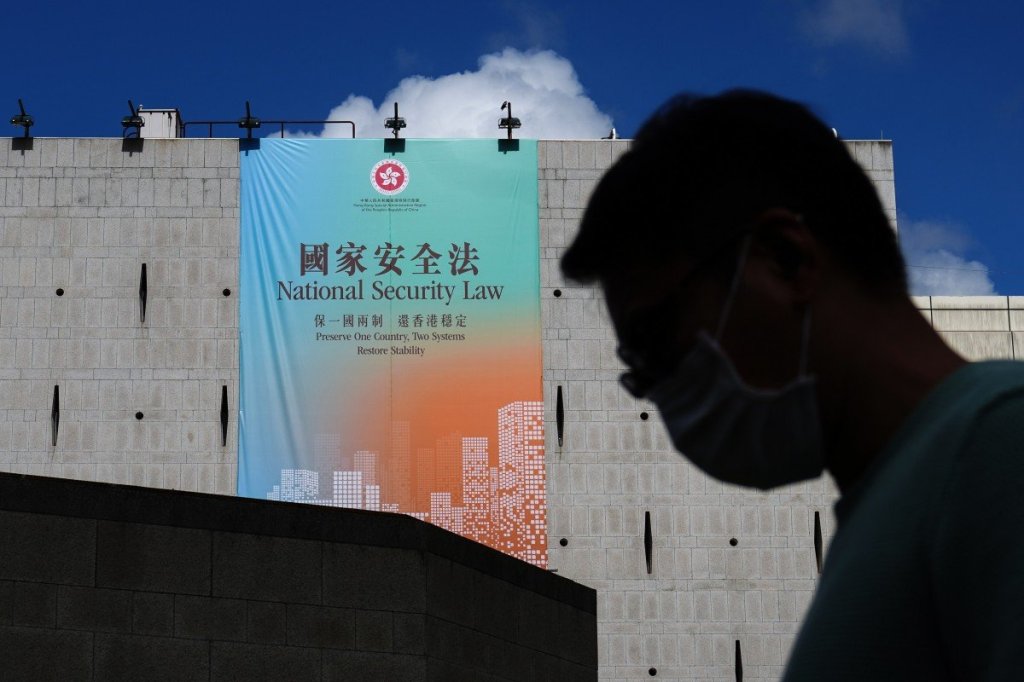
So far, all we can do is speculate, since the full details of the legislation will only be published after the Standing Committee of the National People’s Congress has rubber stamped it in the days ahead. Even if the text was made available beforehand, I doubt it would provide any clarity and help alleviate people’s fears. In China, formal language is often intentionally vague so as to leave room for flexibility. In such a context-rich country, nothing is explicit or predictable. The interpretation of laws, and their subsequent enforcement, is left to the discretion of the government and without an independent judiciary the defendant is almost always guaranteed to lose. After all, the CPC practices rule by law, not rule of law − a subtle but crucial difference. The implementation of the NSL will not be any different.
The interpretation of laws, and their subsequent enforcement, is left to the discretion of the government and without an independent judiciary the defendant is almost always guaranteed to lose.
In contrast, Westerners tend to focus on the formulation of legal terms and phrases since it is the law itself that rules. When trying to make sense of Chinese legislation it is therefore more useful to read between the lines. Instead of focusing on the exact wording used in the legislation, one would be better off taking a bird’s-eye view and try to find the missing pieces elsewhere. For instance, China’s track record of implementing and enforcing similar legislation reveals a lot about the CPC’s (disturbing) intentions and mode of governance. The value of statements and speeches made by Beijing officials lies not in what is actually said, but in what is left out.
In light of the ever expanding picking-quarrels-and-provoking-trouble dossier, it will take a great deal of naivety to assume the CPC will not abuse its new powers. With all the uncertainty that surrounds the new legislation and so little meaningful debate, the only thing predictable about the pending law is that it will perversely serve the Party’s ultimate objective: stability, at all cost.

 China Hand
Let us hope that the international community can at least rise to this challenge. Many thanks for your work in this area.
LikeLiked by 1 person