
It feels somewhat strange to write about Covid-19 at the end of 2022. After all, the name of the disease reminds us it was first discovered over three years ago. In most countries, especially the developed ones, the virus has become a problem of everyday life. Yet in China, people are experiencing an unprecedented wave of cases and deaths. The zero-Covid strategy was long hailed as the only way to get a grip on the unknown and dangerous virus with a population as big as China’s. That praise is now rapidly fading, not only in the West but also amongst the Chinese themselves. A lot has been written about how China ended up in the current situation, faced with the challenge of keeping its economy afloat while its citizens safe. However, less attention is given to what the handling of the virus says about China’s political system and its potential to deal with similar problems.
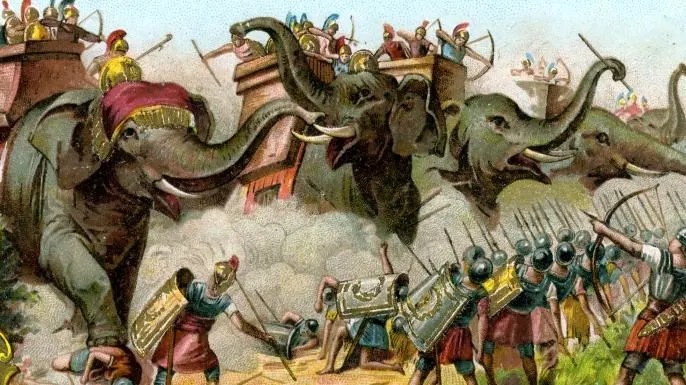
The way I often summarize China’s performance in dealing with the virus is that it has won the battle but has lost the war. This is where the reference to a Pyrrhic victory comes from: despite winning countless battles in containing the virus from spreading, China was eventually defeated in the face of a crippled economy and disgruntled citizens. Or, in the famous words of King Pyrrhus of Epirus after defeating the Romans for the second time in 279 BC: “If we are victorious in one more battle, we shall be utterly ruined.” Pyrrhus’ victories came at a devastating cost, losing a large part of his army including most of its commanders. The Romans, though suffering even more casulties, could quickly replenish their ranks and managed to keep up morale. By its very nature, the virus has unlimited supplies, whereas the Chinese Communist Party (CCP) can only command so many lockdowns, quarantine centres and facemasks. Just like Pyrrhus’ army, zero-Covid was doomed to fail.
In particular, Chinese discipline and determination triumphed over the idle and decadent attitude in the West.
At the start of the outbreak, China seemed to be beating the virus by using draconian but highly effective measures. Entire provinces were locked down, suspected cases were immediately quarantined and close contacts were quickly traced. This resulted in relatively low numbers of cases and deaths. In May 2020, Xi Jinping gave a speech at the World Health Assembly declaring China had succeeded in “turning the tide” in winning the battle against Covid-19. China, a developing country with the world’s largest population, was showing the rest of the world how to keep this new virus under control. In particular, Chinese discipline and determination triumphed over the idle and decadent attitude in the West. And during the first year or so after the outbreak the CCP was absolutely right. When faced with an unknown and potentially very dangerous virus, it makes sense to take drastic measures.
Things started to change around the introduction of the first vaccines and mass immunization campaigns. Various Western pharmaceutical companies had developed vaccines with high efficacy rates in record time. Finally, there was a way out of this endless loop of lock downs and re-openings. Starting out slow, pretty much every country except China has since found a way to live with the virus by pushing for high vaccination rates, protecting the most vulnerable and understanding the virus’ behaviour and mutations. Even developing countries like India and Brazil where the virus had initially wrecked havoc could now truly open up and move on. Although many deaths could have been avoided by showing Chinese-style discipline, the world’s long-term strategy was working well.
Meanwhile, China stubbornly stuck to its initial strategy of contaging the virus at all cost and only administering domesticly developed vaccines. In fact, the CCP downplayed the importance of vaccines as it tried to convince people that these were simply not needed. Being well aware of the inferiority of its own vaccines, the Party deliberately avoided vaccinating the elderly and other high-risk groups. All available resources were spent on temporary solutions such as mass testing, lengthy locksdowns and huge quarantine centres. Doing anything else, such as administering effective (Western) vaccines or allowing for a controlled re-opening of society, would be equivalent to admitting defeat. By zealously clinging to its supposed superior strategy the CCP had manoevered itself in a corner. The only way out was a 180-degree turn, which we are witnessing right now. Nobody knows how bad things currently are or are going to be while the government, as can be expected, is censuring the media and manipulating key data.
Instead of securing decent vaccines and working out a sensible exit strategy, the Party was too busy with saving face and maintaining the narrative.
While the world is painfully watching the unraveling of China’s zero-Covid strategy, the CCP is showing its biggest weakness: unchecked ideology. By placing ideological correctness (i.e., China’s system is ultimately superior) above pragmatic solutions, the Party is prone to repeat the errors of the Mao era. For instance, during the Great Leap Forward (1958-1962), China exported large amounts of grain to the Soviet Union while millions of Chinese were starving in order to show the world its version of communism was working well. Over the past years, China has rushed to develop and export low-quality vaccines to convince both its own people and the outside world it was leading the fight against the pandemic. Instead of securing decent vaccines and working out a sensible exit strategy, the Party was too busy with saving face and maintaining the narrative.
After his last victory against the Romans, Pyrrhus was forced to withdraw and eventually abandon his campaign. Xi Jinping, despite initial success, had to give up his celebrated zero-Covid policy due to mounting economic stress and deteriorating public morale. China’s dire situation could have been avoided if the CCP allowed for more rational debate and pragmatic thinking. Without political change, the Party is destined to make the same mistakes again.

 China Hand